By Devin Smock
SPOILERS THROUGHOUT
I had a hard time figuring out how to review Norm: The Tale of Norm Macdonald because I loved Norm Macdonald. I cannot pretend I came into this thing as some neutral observer. Put two hours of Norm staring off to the side, dragging a joke several miles beyond where it should have died and then somehow making it funny again, and I am probably going to enjoy myself.
Director Judd Apatow gives us plenty of that, but he also understands something important about Norm. Trying to explain him too cleanly would probably ruin him.
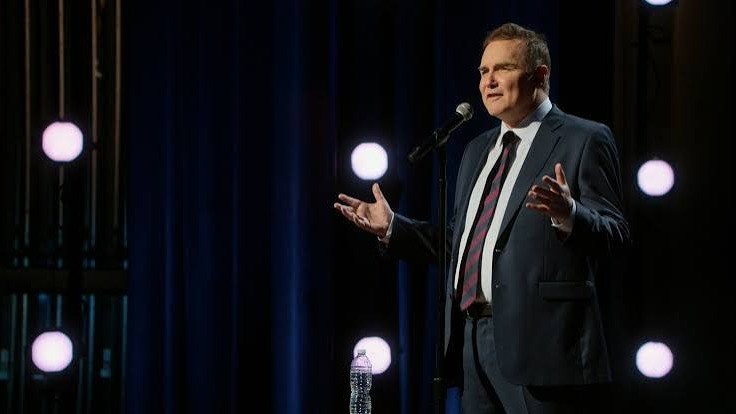
The smartest decision Apatow makes is avoiding the traditional parade of newly recorded interviews. There are no famous comedians sitting in expensive chairs telling us Norm was a genius. Instead, the documentary is built from archival footage, personal photographs, home videos, stand-up, sketches, talk-show appearances and portions of Norm’s audiobook for Based on a True Story: Not a Memoir. Norm tells the story himself, or at least whatever version of himself he feels like giving us.
That distinction matters because Norm lied constantly. Sometimes for a joke. Sometimes because the truth bored him. Sometimes, I suspect, because watching an interviewer attempt to determine whether he was serious amused him more than answering the question ever could. His stories about his education, age and early life change depending on the room. The documentary does not waste much time correcting him. It lets the contradictions sit there and look back at us.
This could easily have become a two-hour collection of clips we have already watched online. There is certainly some of that, especially if you are already a Norm fan and have spent too many late nights watching him torment Conan O’Brien or hijack somebody else’s interview. The difference is in the assembly. Apatow and editor Jake Hostetter organize the footage around pieces of Norm rather than forcing his life into a perfectly straight line. His gambling. His religion. His strange relationship with honesty. His loyalty. His refusal to give an audience the response it expects.
There is a shape to the film even when it appears to be wandering, which feels appropriate.
We see Norm’s early television appearance with David Letterman, his work writing for Roseanne and his arrival at Saturday Night Live. The Weekend Update material still kills. His delivery looked lazy if you were not paying attention, but everything was measured. The pause, the sideways glance, the moment he allowed the audience to get slightly uncomfortable before giving them the rest of the joke.
Then there are the O.J. Simpson jokes. Norm kept making them long after NBC executives clearly wanted him to stop, which eventually helped cost him the Weekend Update chair. The documentary treats this as both a great act of comic stubbornness and a career wound from which he never completely recovered. He knew the safer move. He simply did not respect it.
That was Norm. The joke came before the career, even when the career was the thing being fed into the wood chipper.
I have always thought Norm was underappreciated, although the documentary made me reconsider exactly what that means. Other comedians knew how good he was. Letterman knew. Conan knew. His audience definitely knew. The people who loved Norm did not casually enjoy him. They collected appearances, repeated stories and sent clips to each other like they had discovered something the rest of the world had missed.
Maybe he was not underappreciated as much as he was underused. The entertainment industry recognized his talent but never seemed to know where to put him. He was too unpredictable for the machinery built around late-night television and broad sitcoms. Even when he was given his own shows, movies or podcasts, it often felt as if the format was trying to contain him instead of simply letting him work.
The documentary makes a strong argument that Norm was at his best when somebody gave him a chair, another person and enough time to become a problem.
Apatow clearly loves him, and that affection is both the documentary’s greatest strength and its most obvious limitation. This is closer to a tribute than an investigation. Norm’s gambling addiction, professional self-sabotage and occasional public controversies are included, but the film rarely stays with them long enough to make him truly uncomfortable. Then again, Norm is controlling the conversation from beyond the grave. He tells a joke, changes the subject and slips out the back door.
A more aggressive documentary might have pushed harder against the mythology. This one is more interested in preserving what made him singular. At 126 minutes, it occasionally gets loose, and viewers without an existing attachment to Norm may feel like they have wandered into a very well-edited collection assembled by people who already know every reference. I knew most of them, so that was not much of a problem for me.
The final stretch is where the film becomes something else.
Norm kept his cancer diagnosis private for nine years. Friends, collaborators and audiences watched him change physically without knowing what was happening. He refused to make illness part of his public identity, which meant nobody got to praise him for being brave while he was still alive. Nobody got to turn the disease into his defining story. He kept going onstage and talking about death, cancer, religion and the absurd language people use when they say someone “lost” a battle with an illness.
Those jokes land differently now. Same words. Same timing. Completely different weight.
The footage involving Letterman is especially difficult. Norm admired him, and during Letterman’s final week he becomes emotional while trying to express what the man meant to him. Norm usually kept sincerity hidden behind several layers of nonsense. Here, the machinery briefly fails. He cannot quite get the words out without crying.
It is hard to watch, but it is also beautiful because the documentary does not try to improve the moment. There is no need. Norm loved Letterman, and for once the joke could not protect him from saying it.
The saddest material comes from realizing how many people loved Norm without knowing he was already leaving them. Apatow recalls one of their final shows together, when Norm looked at the audience, told them he loved them and then walked offstage. Nobody there knew he had been sick. In retrospect, it feels like a farewell delivered in the only way Norm could tolerate: publicly, cryptically and without giving anybody enough information to stop him.
I laughed throughout Norm: The Tale of Norm Macdonald. I also found parts of it incredibly sad, probably because the documentary leaves Norm’s voice in the room after reminding us that he is no longer here. It does not present his death as the key that suddenly explains him. There was never going to be a key. He was a funny, intelligent, stubborn and deeply private man who believed a joke could contain more truth than a factual answer.
I finished the documentary missing someone I never knew, which is sentimental enough that Norm probably would have hated hearing it.
Or maybe he would have liked it. Then he would have denied liking it. Then he would have told a nine-minute story about an old man dying in northern Canada, and somewhere near the end you would realize he had been talking about himself the entire time.
7.9/10
Norm: The Tale of Norm Macdonald is now streaming on Netflix.