Like probably a lot of kids my age, I looked forward to the school book fair every year. Somewhere between The Hardy Boys and whatever else I was reading, I always wanted the newest edition of the Guinness Book of World Records.
There was something irresistible about it as a kid. The tallest person. The longest fingernails. The biggest pizza. The oldest person in the world. Human existence reduced to a series of numbers and superlatives you could flip through on the way home from school.
Sam Green begins The Oldest Person in the World from a similar place of fascination. What starts as an attempt to follow the continually changing holder of one particular Guinness record eventually becomes something much simpler and much bigger: a movie about what it means to get a finite amount of time here, whether that turns out to be 40 years or 117.
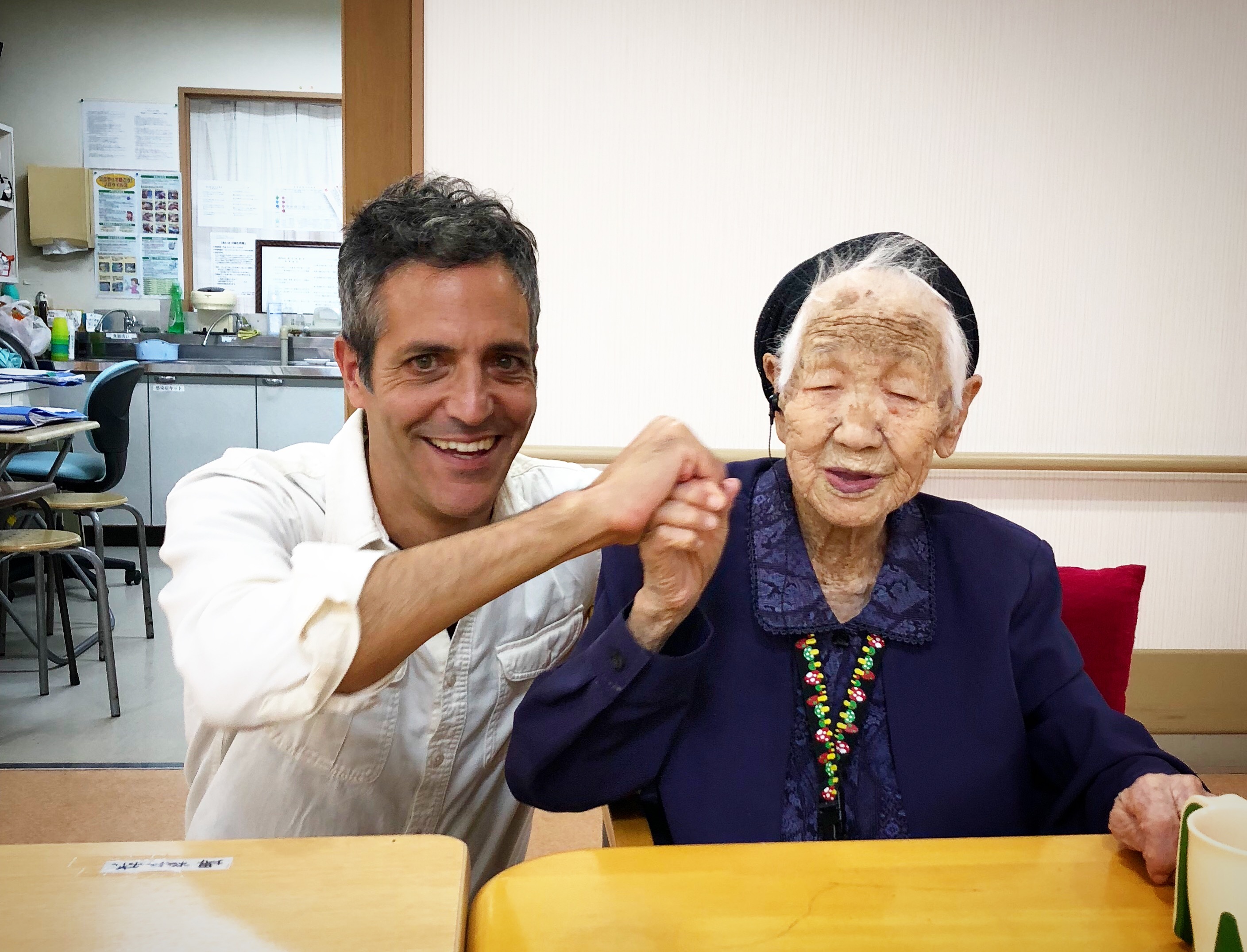
Green began filming in 2015 after learning that Susannah Mushatt Jones, affectionately known as Miss Susie, lived only a few subway stops away from him in Brooklyn. He showed up with a camera for her 116th birthday celebration, not yet knowing that he had started a documentary that would occupy him for the next decade.
Miss Susie sleeps through most of the celebration.
It's funny at first. Politicians speak. Cameras surround her. Everybody is celebrating this monumental accomplishment of reaching 116 years old, while the woman they're celebrating appears like she couldn't be bothered with any of it.
And honestly, who could blame her? She's 116.
But the longer Green stays with the image, the sadder it becomes.
Everyone around Miss Susie seems fascinated by the number attached to her life. She has become a record, an achievement, a living piece of history. Meanwhile, she's simply an extremely old woman whose body is tired.
That tension becomes one of the more interesting ideas in the film. Why are we so obsessed with age? Why do we treat reaching 100, 110 or 116 like winning a contest?
Green doesn't beat the question to death, which is probably smart because our cultural obsession with aging, longevity and cheating death isn't exactly unexplored territory. Instead, he keeps moving from person to person as the title inevitably changes hands.
That's a rather grim mechanism for a documentary when you think about it.
Every time Green gets a new subject, it means the previous one has died.
The title itself becomes a kind of baton nobody gets to carry for very long.
I usually find documentaries more difficult to score than narrative films. That's not because filmmaking craft suddenly stops mattering. It just operates differently. I'm not judging dialogue when there isn't written dialogue, and I can't judge a real person for failing to give the performance I wanted from them.
But the filmmaking decisions still matter.
Where the camera sits matters. Editing matters. Sound matters. Structure matters. Most importantly, the filmmaker's judgment about when to interfere and when to simply watch matters.
Green generally understands that.
The movie is at its best when he doesn't try too hard to manufacture profundity and simply allows these people and the sheer amount of time they've lived to become astonishing on their own.
Violet Brown may provide the most beautiful example.
At 117 years old, Brown begins reciting Lord Byron's “Vision of Belshazzar,” a poem she learned as a child more than a century earlier. The poem was published in Byron's Hebrew Melodies in 1815. Watching someone reach backward through more than a hundred years of memory and retrieve words she learned as a schoolgirl is difficult to describe without making it sound overly sentimental.
It isn't.
It's beautiful.
Then you see her son.
He's in his nineties.
There is something almost absurd about seeing an elderly man standing beside his mother and realizing that, in this relationship, he's still somebody's child. Brown's eldest son, Harland Fairweather, ultimately lived to 97, becoming remarkable in his own right simply because his mother was still alive.
Moments like that are where the movie gets me.
Green repeatedly takes numbers that are too enormous to really comprehend and finds some little human detail that suddenly makes them real.
The film does something similar with world population. People are constantly being added to the planet while other people disappear from it, numbers moving up and down at a scale that's almost impossible to visualize.
Then Green's own son is born.
For the briefest instant, his child is the youngest person alive.
And so were all of us.
Maybe only for a fraction of a second before somebody else was born somewhere else, but every human being who has ever lived once held the exact opposite title of the people Green has spent years chasing.
There's something wildly humbling about that.
Green's decision to bring his own life into the documentary is also where The Oldest Person in the World becomes more than the movie he originally set out to make. His son grows older as the project continues, creating a natural clock inside a movie devoted to people at the opposite end of life.
At times, that personal approach threatens to pull focus away from the people Green originally set out to document. There are places where I wanted to spend a little longer with them rather than return to the filmmaker. The documentary is also episodic by design, and the repetition of meeting another record holder, learning a little about them and eventually watching the title move on can occasionally make the middle feel looser than it needs to.
But the personal material eventually earns its place.
Because then Green gets sick.
He is diagnosed with multiple myeloma at 50, suddenly turning a movie in which he has spent years studying extreme longevity into something much more immediate. The guy asking people what it means to live to 116 now has to confront the possibility that his own life could be considerably shorter.
It's a tack hammer to the movie.
And it's incredibly human.
Anyone who has dealt with a serious diagnosis themselves, or watched somebody they love go through one, will recognize how quickly life can become divided into a before and an after. Doctors, tests, treatments and numbers suddenly take over. The hypothetical question Green has been asking throughout the film, how much time do we get, stops being hypothetical.
That could have turned the documentary into something unbearably sentimental.
For the most part, it doesn't.
Green understands that life doesn't arrange itself neatly around the themes of your movie. Birth happens. Illness happens. Somebody lives to 117. Somebody doesn't.
You keep going.
The Jeanne Calment section may be the strangest example of what happens when our fascination with longevity turns into spectacle.
Calment, whose verified lifespan of 122 years and 164 days remains the longest documented human life, became a genuine celebrity in France. Near the end of her life, she even released recordings of her reminiscences laid over techno and funk-rap music.
Watching the attention surrounding her is funny, bizarre and a little uncomfortable.
There's something amusing about a 121-year-old woman becoming involved with a rap record. But there's also something troubling about how easily an extremely elderly human being can become a product because everyone around her is fascinated by the number attached to her age.
That discomfort isn't just something Green invented for effect. Contemporary reporting about Calment's recording deal noted concerns over whether she fully understood what she had agreed to.
Maybe she enjoyed some of the attention. I hope she did.
But The Oldest Person in the World is smart enough to leave some discomfort hanging around the image.
The documentary could easily have become a feature-length collection of cute old people offering secrets to longevity. Eat this food. Drink this thing. Avoid stress. Don't get married. Have a glass of wine every night.
Green is more interested in the fact that there doesn't seem to be one answer.
Some of these people lived carefully. Some didn't. Jeanne Calment smoked for most of her life. Kane Tanaka loved Coca-Cola. Emma Morano's advice included staying away from men.
Eventually you have to confront the possibility that a large amount of longevity is simply luck.
Genetics.
Circumstance.
Randomness.
That's both comforting and terrifying.
You can do everything right and not get 116 years. Somebody else can violate every piece of health advice they've ever been given and make it past 100.
Which means the more important question isn't necessarily how to live the longest.
It's what you do with whatever amount you get.
That's where Maria Branyas comes in.
Late in the film, Green meets Branyas in Spain. At 117, she looks directly toward the camera and offers one of the simplest pieces of advice in the movie:
“You are young. Now is the time to do good works.”
That's it.
No magic diet.
No supplement.
No secret exercise routine.
Do something worthwhile while you can.
The Oldest Person in the World isn't perfect. Its loose, essayistic structure occasionally wanders, and there are moments when Green's fascination with his subject is more compelling than whatever larger point he's trying to extract from it. The movie doesn't uncover some previously unknown secret about mortality. We already know we're going to die. We already know time goes faster than we'd like.
But knowing something and actually feeling it are different things.
Green succeeds at making you feel it.
The documentary is simple, warm and deeply human. It's funny without treating its subjects like oddities, sad without wallowing in death, and ultimately much more interested in living than dying.
I started the movie thinking about those Guinness books I bought at school book fairs and how exciting it seemed to know who was the fastest, tallest, strongest or oldest.
I finished it thinking about how little the number actually tells us.
Living 116 years is extraordinary.
Living one year is pretty extraordinary when you really stop to think about it.
Maria Branyas was right.
We're young now.
Do some good with it.
7.1/10
Critical Screening was provided a screener of The Oldest Person in the World for review purposes.