Sometimes you take a swing on something free on YouTube and expect the cinematic equivalent of digging through a dollar bin. Maybe you find something interesting. Maybe you waste two hours. Occasionally, you accidentally uncover a film that makes you wonder why nobody told you about it.
Wrath of Silence was that movie for me.
Within the first few minutes, I could tell director Xin Yukun knew what he was doing. The cinematography by He Shan is outstanding from the beginning, but it is not simply a collection of attractive shots. The camera knows when to move, when to hold still and when to let a character exist inside the frame without forcing the story forward.
The compositions are seriously notable. Characters are surrounded by rock, dust, machinery and enormous stretches of empty land. The landscapes around Baotou, Inner Mongolia are beautiful, but the movie never treats them like tourism photography. These mountains have been hollowed out by illegal mining. The ground itself feels violated.
That gives the beauty some ugliness underneath it.
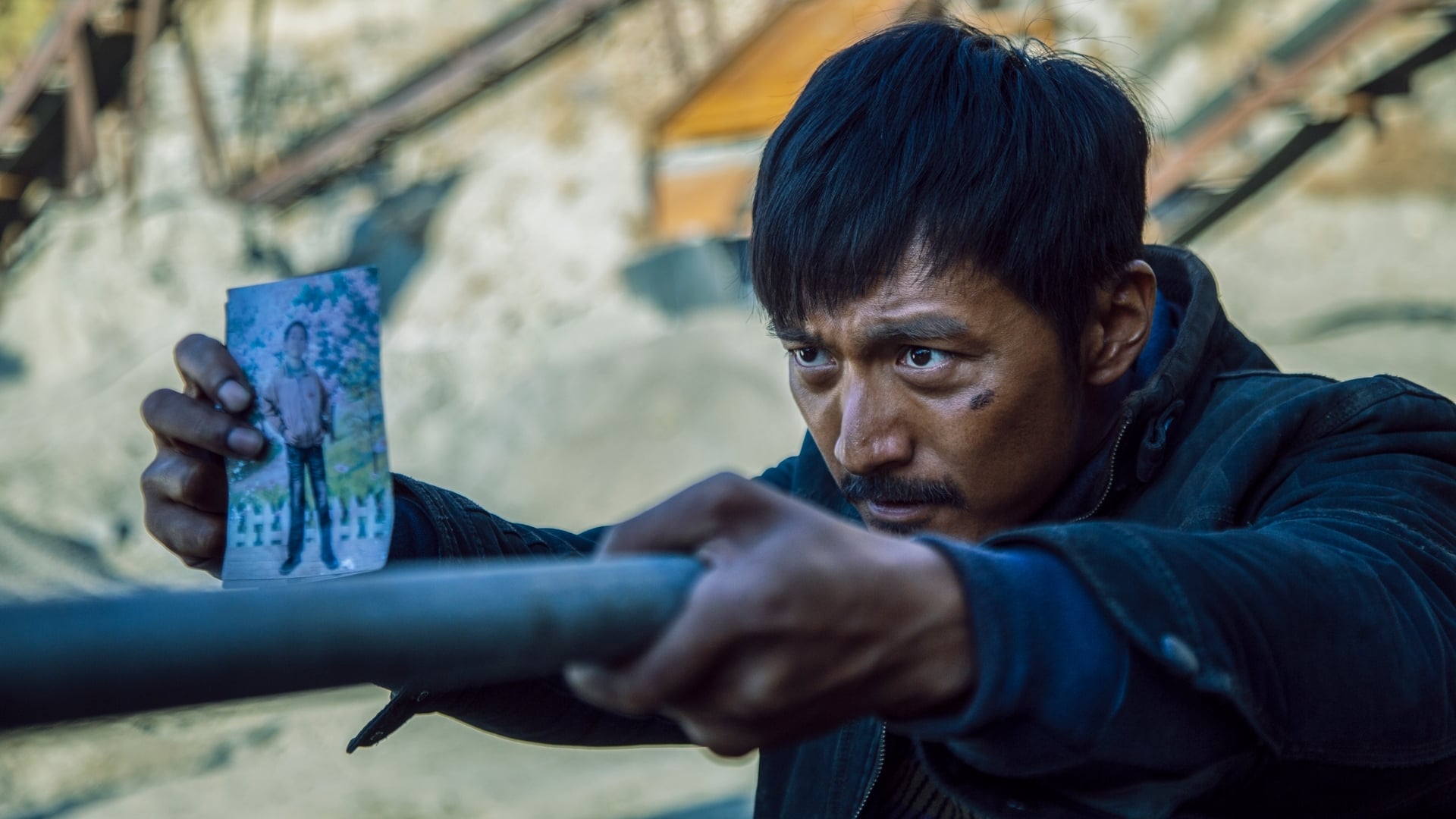
The story is fairly simple. Zhang Baomin, a mute miner played by Song Yang, returns to his village after learning that his son disappeared while tending sheep. His search leads him into a criminal network built around mining, corruption and men who have accumulated enough money to believe consequences belong to somebody else.
Baomin cannot speak, which gives the film an obvious opportunity to become gimmicky. Xin avoids that. His silence is not some cute screenwriting exercise. It changes how he has to move through the world. He cannot explain himself, negotiate with people or deliver the dramatic speeches another movie would eventually give him. He watches, reacts and, when necessary, starts hitting people.
Song Yang is excellent. Baomin is not presented as a brilliant investigator or an unstoppable action hero. He is a desperate father with a capacity for violence and no patience left. He gets hurt. He gets overwhelmed. Sometimes he stumbles into a situation without anything resembling a plan.
That makes the action work.
There is a revenge sequence that becomes slightly ridiculous, but it remains grounded in rage. Baomin does not suddenly transform into John Wick. He fights like somebody who knows how to hurt people but is still trapped inside a human body. He slips, improvises and uses whatever is nearby. The violence is forceful because it feels physical rather than choreographed for applause.
Jiang Wu plays Chang Wannian, the mining boss at the center of this world, and some of the film’s strongest scenes belong to him. Chang is not constantly screaming or announcing that he is evil. He is calm, wealthy and comfortable. He has reached the point where cruelty has become another management tool.
His private lair is fantastic. The production design by Lan Zhiqiang is on another level. It is elegant, excessive and vaguely grotesque, an expensive cave built by a man who sees the landscape and the people living on it as things to consume. The film’s recurring attention to meat is not subtle, but it does not need to be. Chang eats while other people suffer. Everything around him eventually becomes flesh.
The power imbalance is built into the physical spaces. Baomin moves through battered homes, mines and exposed landscapes. Chang sits inside controlled rooms surrounded by wealth, food and men willing to do violence for him. The production design tells us who owns this world before the screenplay has to explain it.
That is what impressed me most about Wrath of Silence. Xin understands how to tell a story without constantly talking about it.
Even the larger social ideas arrive through images and behavior. Illegal mining has damaged the land. Money has separated the people who make decisions from the people who live with them. A missing child becomes connected to a system in which silence can be purchased, imposed or used for survival.
The film does not stop so somebody can explain the metaphor.
Yuan Wenkang is also strong as Xu Wenjie, a lawyer whose compromised position places him between Baomin and Chang. He is not as immediately commanding as either man, but that is the point. Baomin has nothing left except his determination. Chang has power and behaves accordingly. Xu has enough status to understand the machinery but not enough courage to escape what he helped maintain.
The three men represent different relationships to power, violence and silence. Xin develops that without draining the movie of momentum or turning it into a political lecture.
The final stretch twists the story into something more powerful than the revenge thriller I thought I was watching. I am not going to explain what happens. The ending deserves to arrive without somebody outlining it beforehand. What matters is that it forces us to reconsider the different forms of silence operating throughout the movie.
Baomin cannot speak. Other people can.
That difference becomes devastating.
The performances are strong across the board, the action is satisfying without swallowing the film, and the visual storytelling is better than what I find in plenty of movies with much larger budgets. He Shan’s photography alone makes this worth watching. The compositions, landscapes and use of negative space give the story room to breathe while maintaining a constant sense that something terrible has already happened beneath the surface.
I do not want to overstate the discovery. Wrath of Silence was successful enough in China and played international festivals. People knew it was good. I simply managed to miss it.
Still, stumbling across something this accomplished for free on YouTube felt like a minor revelation.
Take the swing.
7.5/10
Wrath of Silence is currently available to watch free on YouTube.